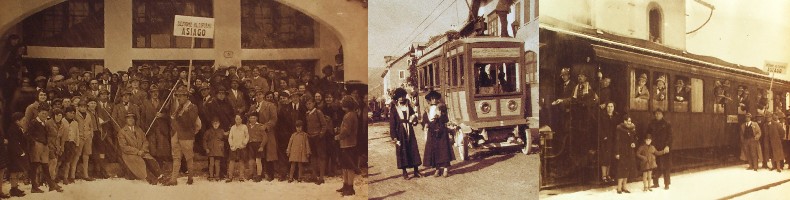
(Early photos of Asiago - provided by Amedeo Cunico

|
|
|
(Early photos of Asiago - provided by Amedeo Cunico |
|
|
Home
-
Back to the "Cunico Ancestry" page Storia di Asiago - A brief narrative about L'Altopiano Settlement of Asiago - Theories about how Asiago was settled. Spettabile Reggenza - A brief history of Spettabile Reggenza dei Sette Comuni by Gerardo Rigoni Article by Gerardo Rigoni - Another article by Gerardo Rigoni L'Altopiano Contrade - How the comuni are divided into contradi |
Comune di Asiago - Provincia di Vicenza - Regione del Veneto
|
|
|
||
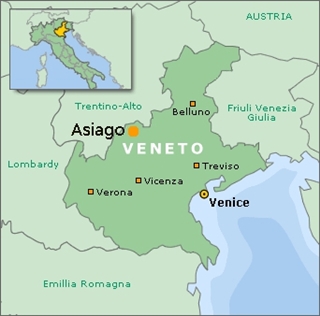 |
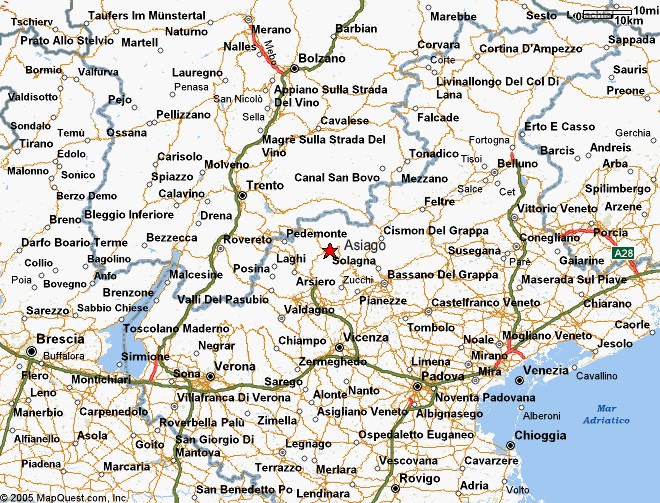
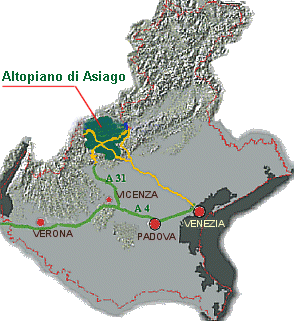
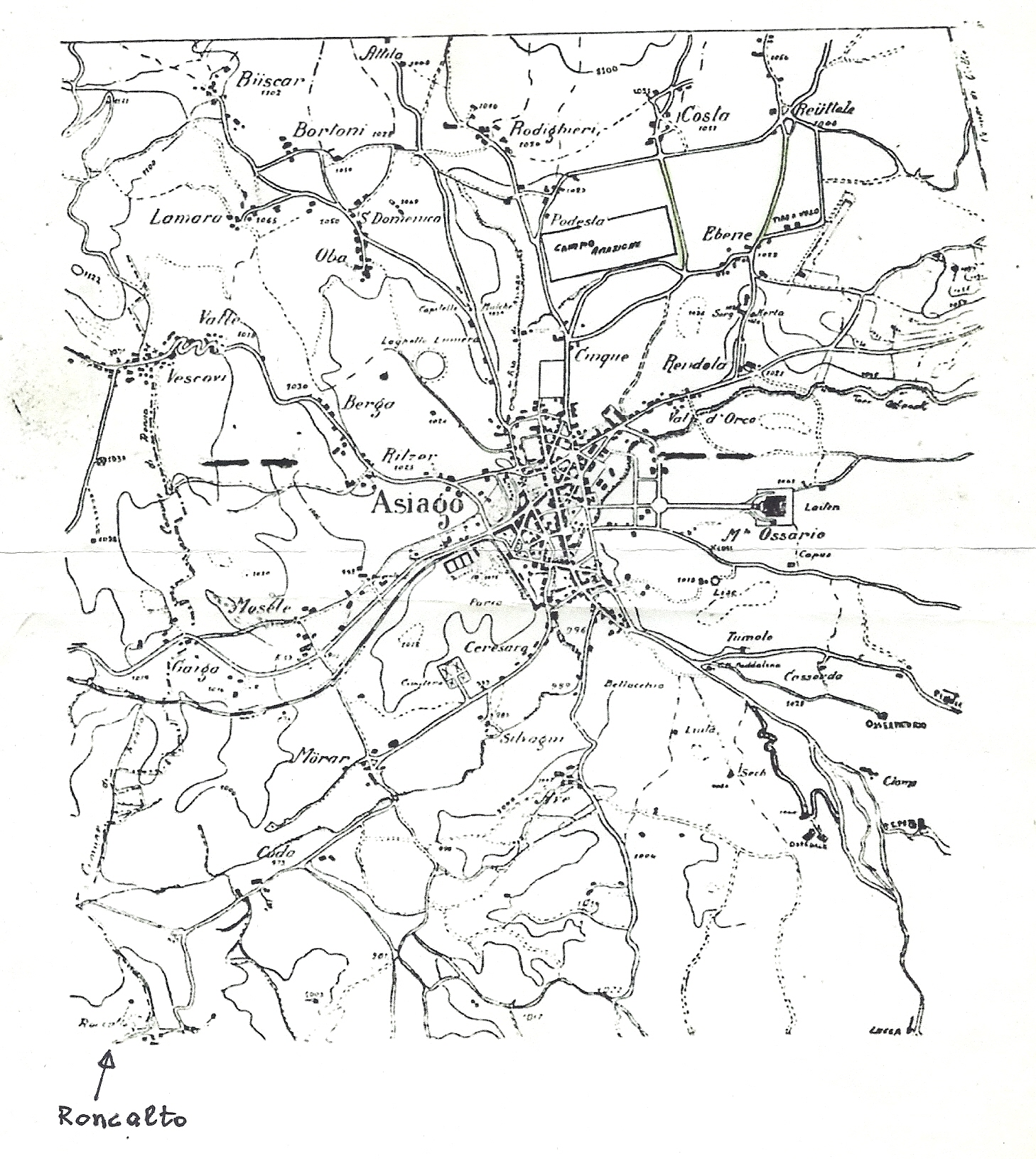
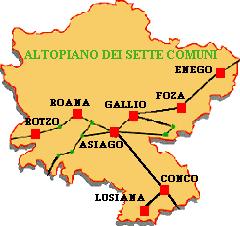
In the mountains to the North of Vicenza (Northwest of Venezia), in a valley surrounded by forests and evergreen trees, is a little district of Asiago, inhabited by a Teutonic colony known under the name of the "Sieben Perghe", "Spettabile Reggenza dei 7 comuni", or "Sette Comuni". With the addition of Conco in 1996, there are now 8 comuni in L'Altopiano, so the Sette Comuni" has become the "Otto Comuni". This community is in the province of Vicenza, in the Veneto Region of Italia. The district which they occupy, is an area of 86 square miles. The territory is known as the Pre Alpi Venete. It contains 7 burghs, 24 villages, and a population of about 25,000. It is almost entirely mountainous, with it's boundaries being the Brenta on the East, the Astico on the West, the Tyrolian Alps on the North, and to the South it has volcanic hills extending from Marostria to Caltrano. |
|
|
|
L'Altopiano was first inhabited by bronze age hunters. The remains of their huts were found in the 1960's by a group of archeologists from the university of Padova. The huts are in the periferical area of the Altopiano, precisely in Lusiana - Conco area and the Rotzo township. |
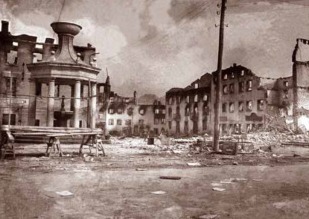
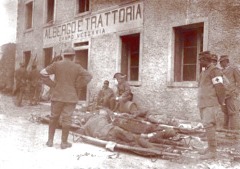
The first documented signs of the existence of stable habitants of the Altopiano id in a document dating 936 in which Berengario, the Longobard king, gives the entire Altopiano to the Bishops of Padova. The archdiocese of Padova has always been very powerful and rich, it still is today. The bishops of Padova seeing that the area was scarcely inhabited and needing the land fruitful began inviting German peasants, from the Bavarian Alps, to settle the Altopiano. This immigration began around the year 1000 and continued until the XIV century. This is where the cimbro language began taking foot in Asiago and the Altopiano. Asiago is the principal town of the “Seven Communes” on the historic Asiago plateau (L'Altopiano). The oldest villages of the plateau were Rotzo and Enego. As settlers moved toward the center of the plateau, the villages of Asiago, Lusiana, Gallio, Roana, & Foza were founded. Today there are actually eight comunes as Conco was added recently. In the 19th Century the area was divided between the Kingdom of Italy and the Austro-Hungarian Empire. Each community, by boundary and imperial policy, took on a more Austrian or Italian identity. To make matters worse, modern warfare viewed the Altopiano as an avenue of invasion, as opposed to ancient routes along the Adige or Brenta River valleys. Both nations built a string of modern fortresses across the plateau. The Austrian Emperor Franz-Josef called his forts "the iron girdle." These structures were not the outdated brick, earth and stone forts of France or Belgium, hastily reinforced with a concrete shell and iron turrets. Both Austrian and Italian forts were modern, of solid concrete, reinforced with iron, incorporating the latest military technology. The first shots of the war between Austria and Italy were fired on the Altipiano. The Austrian forts proved their value in withstanding every Italian attack. Asiago, and most of this Trentino highland, were overrun by the Austrians twice, in the Spring Offensive of 1916 (known as the Strafexpedition or punishment war'') and the Fall Offensive of 1917. The Austrians never once broke out of the confines of the Altipiano onto the open plains of Veneto, due to fierce Italian resistance, the rough terrain and an influenza epidemic in the Austrian ranks during the Winter of 1917/18. During the period under Austrian rule, a large amount of emigration took place in the Altopiano. It happened again in the early years of the Fascist Regime of WWI. The sheer destruction of this war, and opposition to the regime, caused an exodus of many inhabitants to countries where work was more plentiful (.i.e. United States, South America and Australia). |
The Sacrarium, unveiled in 1938, is
the tomb of over 54,000 identified and
unknown WWI Italian and Austro-Hungarian soldiers (12,795
identified, 21,491 unknown soldiers, 19,999 Austro-Hungarian).
As with all ossuaries in Italy, Il
Sacrario is being added to yearly, as hiker, farmer and forester find new
remains.
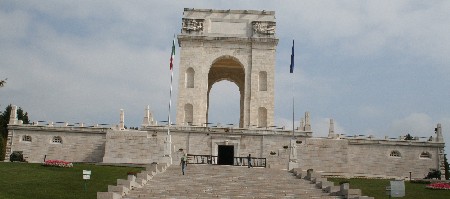
(il Sacrario Militare dell'Altopiano di
Asiago)
|
Asiago e le sue contrade
SETTLEMENT OF L"ALTOPIANO
There are at least two theories prevalent regarding the settlement of the region
by the Cimbri. It is known that from at least 200 BC the Cimbri lived in the
northern parts of Jutland/Denmark. The town of Aalborg and adjoining areas have
evidence and artifacts supporting this fact. The Roman historian Pliny the Elder
also refers to that area as the land of the Cimbri. |
||
 |
The historian Tacitus also
mentioned a people bearing the name Cimbri who sent ambassadors to the Roman
emperor Augustus. Probably due to climatic changes and great floods, the
tribes migrated south into Europe, together with neighboring tribes of Teutons,
sometime around the year 130 BC. Indications are that their travels took them
through Bohemia to what is now northern Yugoslavia, then turning westward
through Austria, Bavaria into eastern France. These journeys correspond quite closely to the river valleys of the Elbe, Danube and Rhone. They reportedly defeated Roman armies in battles at Noreia near the present town of Ljubljana and then again at Orange in the Rhone valley. In 101 BC the Cimbri were annihilated by the Roman general Gaius Marius in the Po valley of northern Italy, perhaps near the present city of Vercelli. One theory holds that the few survivors took refuge in the mountains and plateaus of northern Italy. This raises some question, however, in that Roman writers report that the women killed themselves and all their children in the aftermath of the total defeat by the Romans. |
|
| In the 8th
century there was a population explosion from Jutland. Frederick was the
King of Denmark. In the year 1000, the Bishop for L'Altopiano invited
the Germans from Bavaria. Other ancient documentary evidence supports the theory that the area was settled by Cimbri descendants during large southern migrations from areas around Bavaria in the 11th/12th centuries. One indication is a document showing that in 1287 the prince bishop of Verona, Federico Vanga (the German Friedrich von Wangen) was petitioned by Bavarian neighbors to settle in the territory of the Lessinia hills. These people were called "tzimberer", from which the word "Cimbri" is speculated to have been derived. Another theory holds that the Cimbri may have entered the area through the Brenner Pass during their nomadic wanderings before the time of Christ. Perhaps each of these theories has some legitimate credibility. |
||
| Sometime during the
12th and 13th centuries, the various settlements in the Veneto mountains
formed themselves into self-governing federations. These were the 13 communes in the northern Verona Hills and the 7 communes in the Asiago plateau. Both groups formed loose alliances with the city of Venice mostly for trade purposes. The Sette (7) Comuni federation is known to have been fully organized between the years of 1270 and 1339 but the Document of Federation was destroyed in fires due to hostilities circa 1500. The federation lasted until the Napoleanic invasions circa 1807. The territory was under Austrian rule from 1815 to 1866 and became a part of Italy by international accord in 1866. For more on the Cimbri, click here. |
 |
|
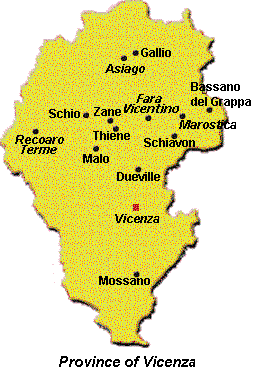 |
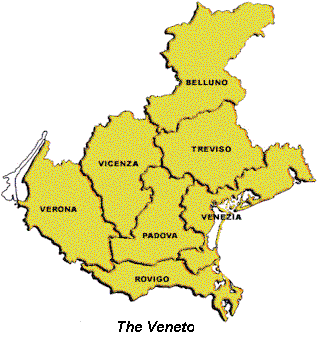
Vicenza Province The Province of Vicenza has a surface area of 272,220 square km with a
total population of about 770,000, and is administratively divided into
121 Municipalities. |
|
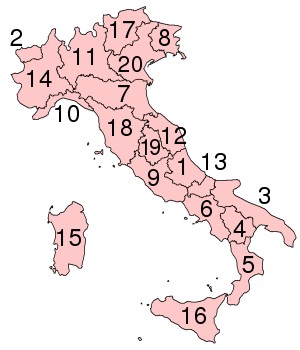
Map of Italian Regions
Find an Italian town
here |
||||||||||||||||||||||||||||||||||||||||||
|
|
FYI - You can search Italian White Pages by Province (or postal code). In the Cognome o nome Azienda field, enter the surname. In the "Dove" field, enter the province.Go to this page: |
|
Italian Provinces |
|||||
| AG | AGRIGENTO | GENOVA | GE | PAVIA | PV |
| AL | ALESSANDRIA | GORIZIA | GO | POTENZA | PZ |
| AN | ANCONA | GROSSETO | GR | RAVENNA | RA |
| AO | AOSTA | IMPERIA | IM | REGGIO CALABRIA | RC |
| AP | ASCOLI PICENO | ISERNIA | IS | REGGIO EMILIA | RE |
| AQ | L'AQUILA | CROTONE | KR | RAGUSA | RG |
| AR | AREZZO | LECCO | LC | RIETI | RI |
| AT | ASTI | LECCE | LE | ROMA | RM |
| AV | AVELLINO | LIVORNO | LI | RIMINI | RN |
| BA | BARI | LODI | LO | ROVIGO | RO |
| BG | BERGAMO | LATINA | LT | SALERNO | SA |
| BI | BIELLA | LUCCA | LU | SIENA | SI |
| BL | BELLUNO | MACERATA | MC | SONDRIO | SO |
| BN | BENEVENTO | MESSINA | ME | LA SPEZIA | SP |
| BO | BOLOGNA | MILANO | MI | SIRACUSA | SR |
| BR | BRINDISI | MANTOVA | MN | SASSARI | SS |
| BS | BRESCIA | MODENA | MO | SAVONA | SV |
| BZ | BOLZANO | MASSA CARRARA | MS | TARANTO | TA |
| CA | CAGLIARI | MATERA | MT | TERAMO | TE |
| CB | CAMPOBASSO | NAPOLI | NA | TRENTO | TN |
| CE | CASERTA | NOVARA | NO | TORINO | TO |
| CH | CHIETI | NUORO | NU | TRAPANI | TP |
| CL | CALTANISSETTA | ORISTANO | OR | TERNI | TR |
| CN | CUNEO | PALERMO | PA | TRIESTE | TS |
| CO | COMO | PIACENZA | PC | TREVISO | TV |
| CR | CREMONA | PADOVA | PD | UDINE | UD |
| CS | COSENZA | PESCARA | PE | VARESE | VA |
| CT | CATANIA | PERUGIA | PG | VERBANIA | VB |
| CZ | CATANZARO | PISA | PI | VERCELLI | VC |
| EN | ENNA | PORDENONE | PN | VENEZIA | VE |
| FE | FERRARA | PRATO | PO | VICENZA | VI |
| FG | FOGGIA | PARMA | PR | VERONA | VR |
| FI | FIRENZE | PESARO | PS | VITERBO | VT |
| FO | FORLI` | PISTOIA | PT | ||
| FR | FROSINONE | VIBO VALENTIA | VV | ||
|

 Da quando la Corte di Cassazione ha deliberato a favore del referendum pro
Trento, la questione è oggetto di dibattito in tutte le piazze dell’Altopiano.
Chi si dichiara a favore, chi contrario: ognuno porta avanti i suoi ragionamenti
che troppo spesso, si soffermano solamente sulla questione economica. Per quanto
possa essere un punto importante, non è certamente quello preso in
considerazione dalla Corte di Cassazione e neppure dal movimento referendario.
Le ragioni che hanno spinto la Cassazione a dare l’ok al referendum sono di
natura natura storica ed etnica, tra l’altro sono le uniche motivazioni ritenute
valide dalla legge per cambiare regione.
Da quando la Corte di Cassazione ha deliberato a favore del referendum pro
Trento, la questione è oggetto di dibattito in tutte le piazze dell’Altopiano.
Chi si dichiara a favore, chi contrario: ognuno porta avanti i suoi ragionamenti
che troppo spesso, si soffermano solamente sulla questione economica. Per quanto
possa essere un punto importante, non è certamente quello preso in
considerazione dalla Corte di Cassazione e neppure dal movimento referendario.
Le ragioni che hanno spinto la Cassazione a dare l’ok al referendum sono di
natura natura storica ed etnica, tra l’altro sono le uniche motivazioni ritenute
valide dalla legge per cambiare regione.